23.6.2026
When your wrists hurt in yoga
Wrist pain in yoga: what really helps
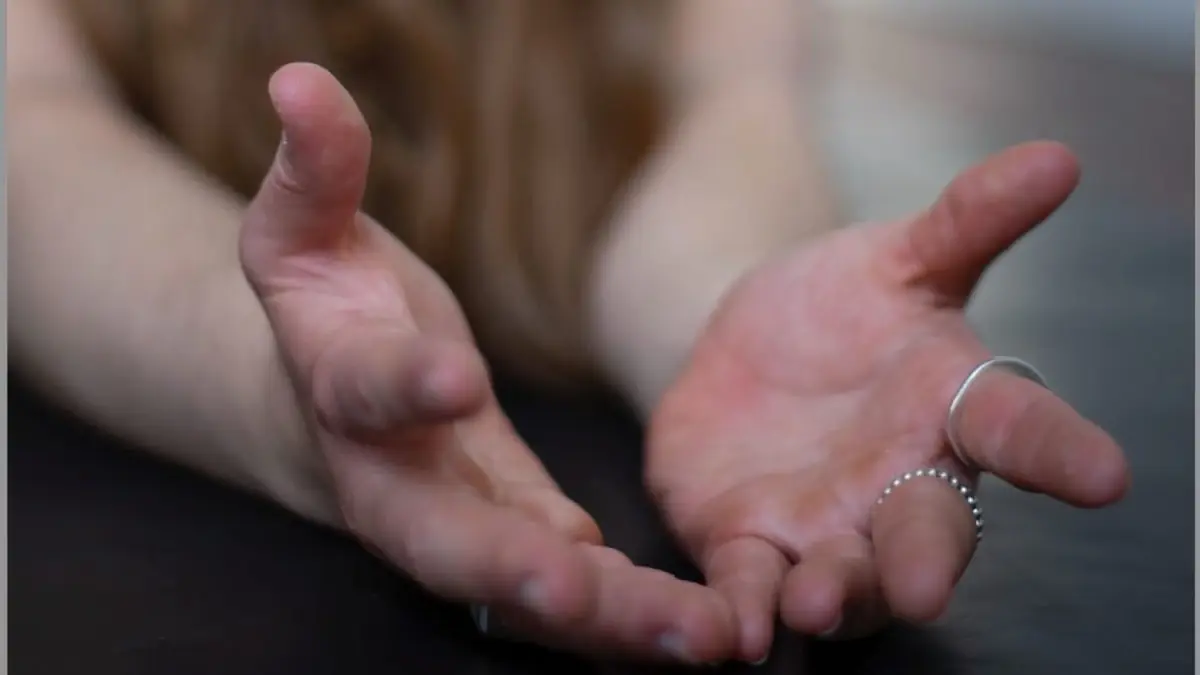
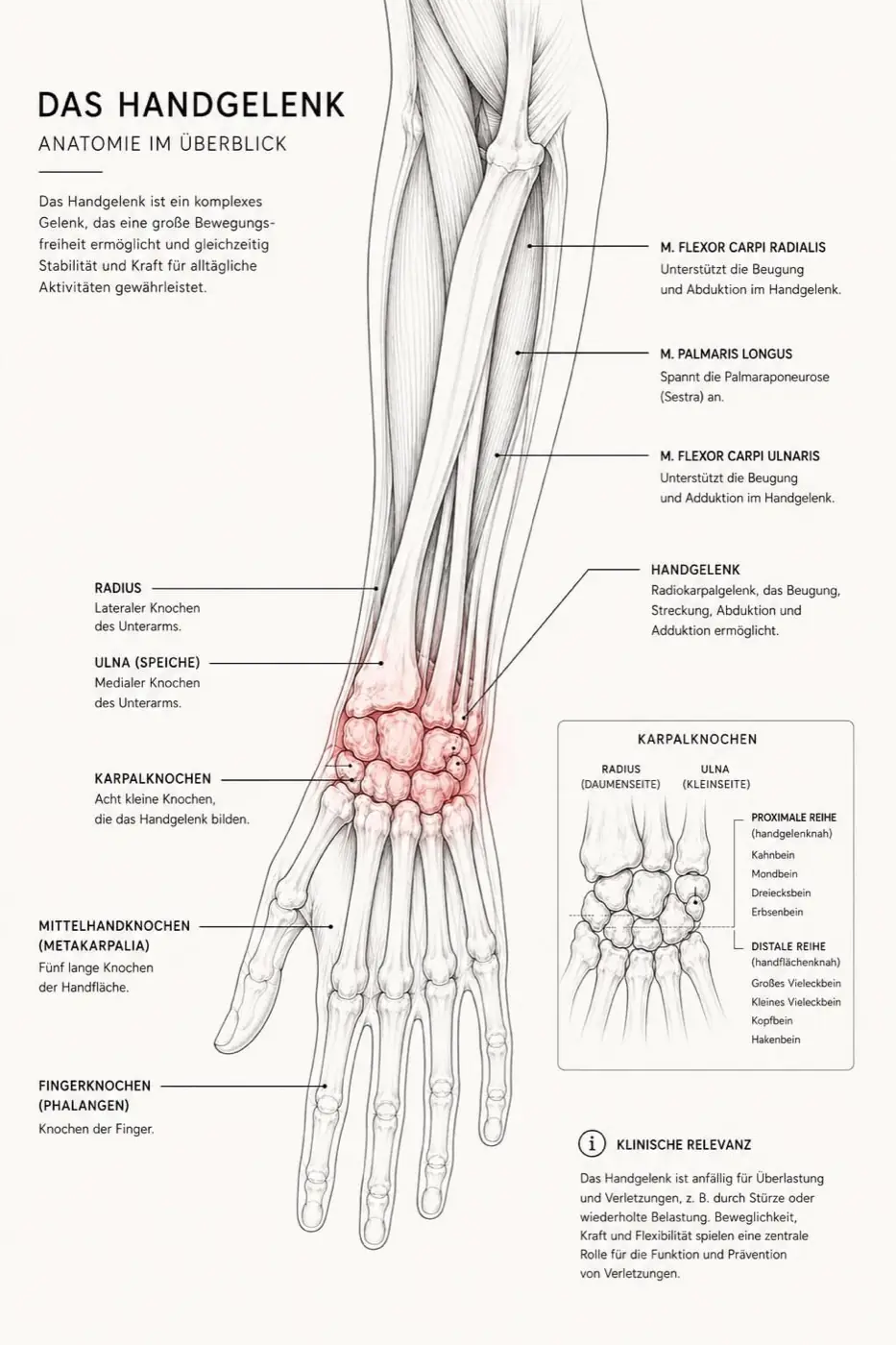
Wrist pain is one of the more common complaints in yoga practice. It is often most noticeable in positions such as Plank, Chaturanga, Downward Facing Dog, Tabletop or arm balances. In these poses, the wrist carries part of your body weight. If load, technique, mobility and strength don't match well, the tissue can react with irritation.
From a medical point of view, wrist pain can come from different structures: the joint, ligaments, tendons, muscles or nerves. Overload often plays a role, meaning too much pressure, too many repetitions or a load the tissue isn't yet sufficiently prepared for.
That doesn't automatically mean something is “broken”. But it does mean the body is giving feedback. And that feedback should be taken seriously.
What you can adjust straight away
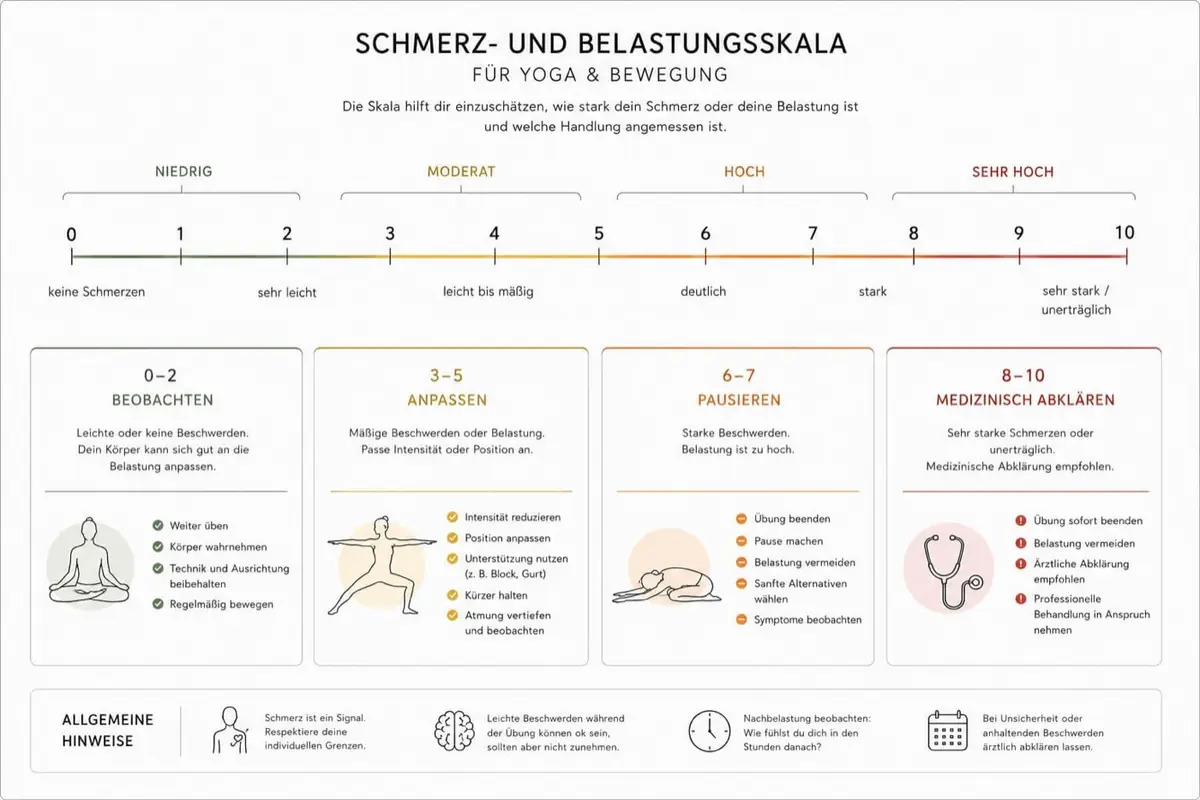
Pain is not a signal to ignore. If your wrist hurts noticeably during practice, a break or an adjustment makes sense.
That can mean:
- skipping vinyasas
- reducing or replacing Chaturangas
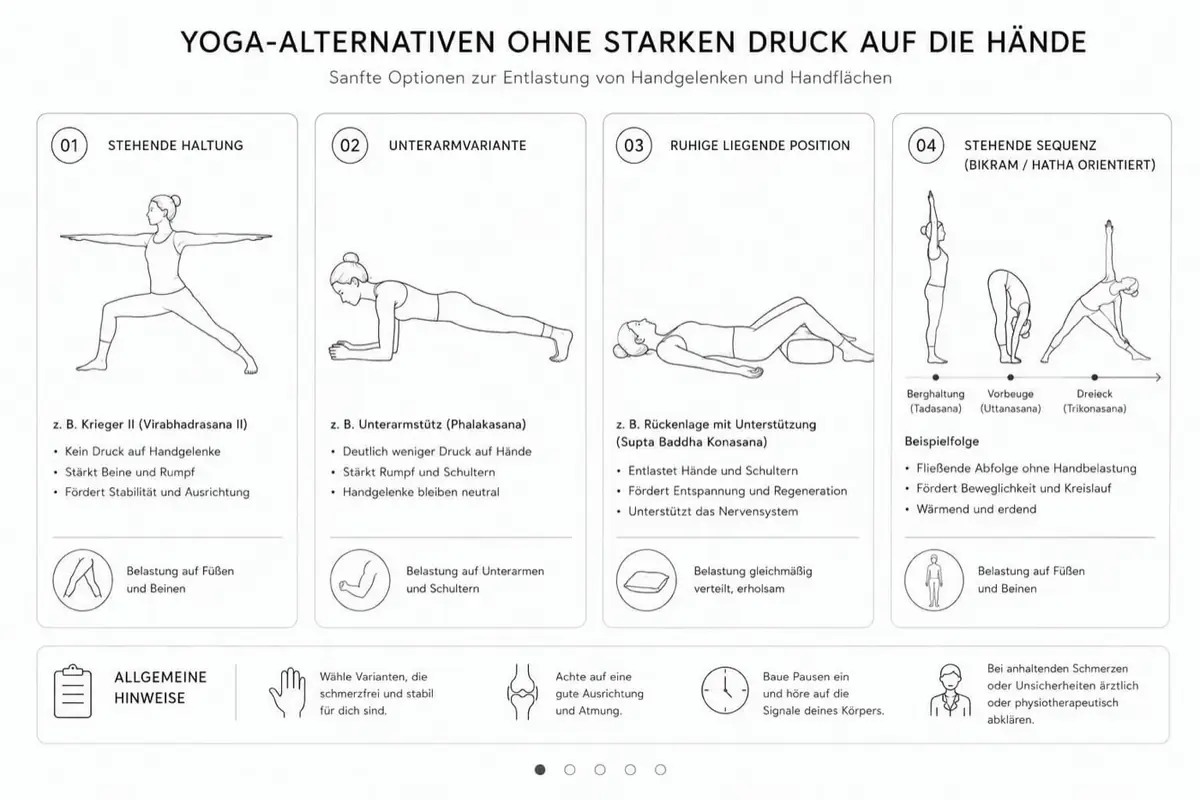
- switching to your forearms
- holding weight-bearing positions for less time
- putting less weight on your hands
- choosing classes that put little or no pressure on the wrists
Especially when your wrists are sensitive, it can make sense to switch to calmer or standing forms of practice for a while. Many of our classes, especially at Studio 1150, involve no heavy load on the wrists at all. These include above all Hot, Hatha or Bikram-style classes, where the focus is more on standing positions, mobility, breathing and endurance.
Also important: our studios have special blocks and grips that you can borrow free of charge. These props can help change the angle of the wrist and distribute pressure better. Just ask the teacher or the team on site before class.
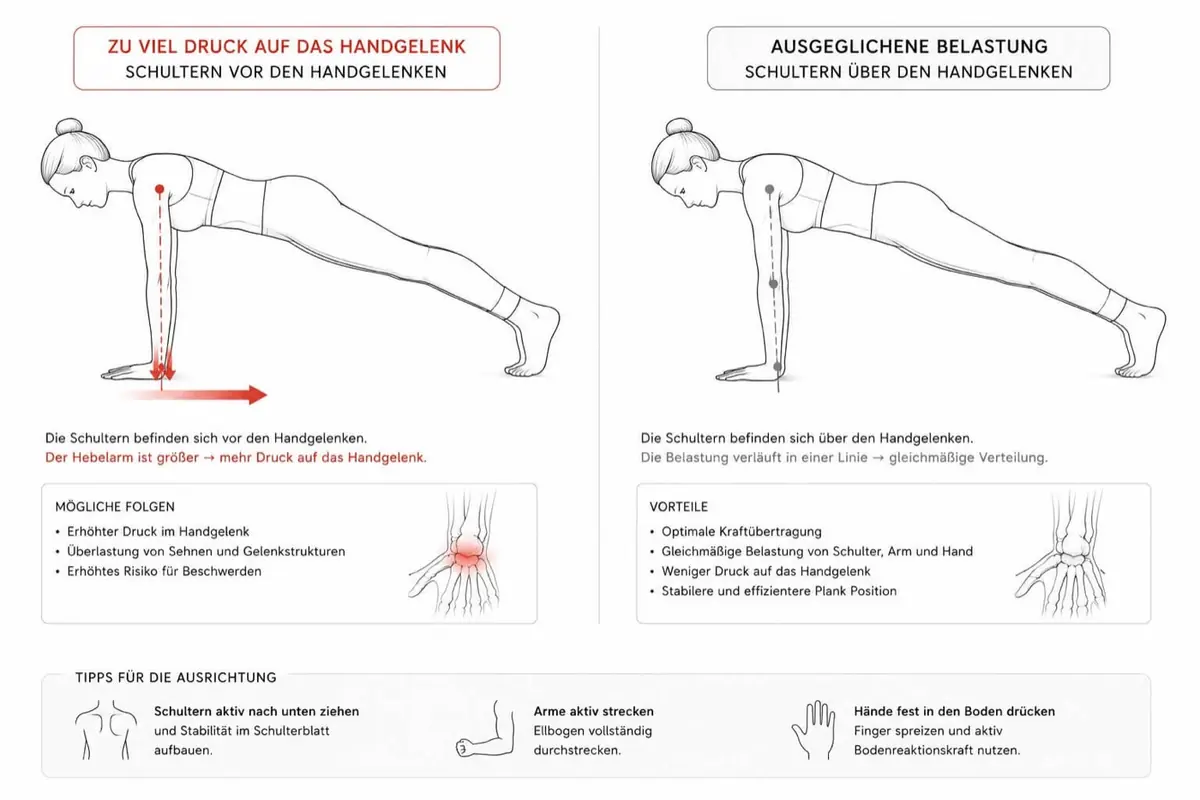
Technique: distributing pressure better
Technique also makes a big difference. In static weight-bearing positions such as Plank or Tabletop, the shoulders shouldn't hang far in front of the wrists for long if this causes pressure or pain.
In the vinyasa itself, it's also worth paying attention to how deep you go. In Chaturanga in particular, it often makes sense not to go lower than your strength allows you to control cleanly. Sinking too far significantly increases the load on the wrists and shoulders.
The fingers are actively spread, the palm carries weight evenly and you consciously push the floor away. This spreads the load better across the hand, arm and shoulder instead of letting it sink into the wrist in isolation.
It often also helps not to put the pressure only into the heel of the hand. The fingertips work actively, the forearms stay stable and the shoulders consciously help carry the load. This creates more whole-body engagement and less passive sinking into the joint.
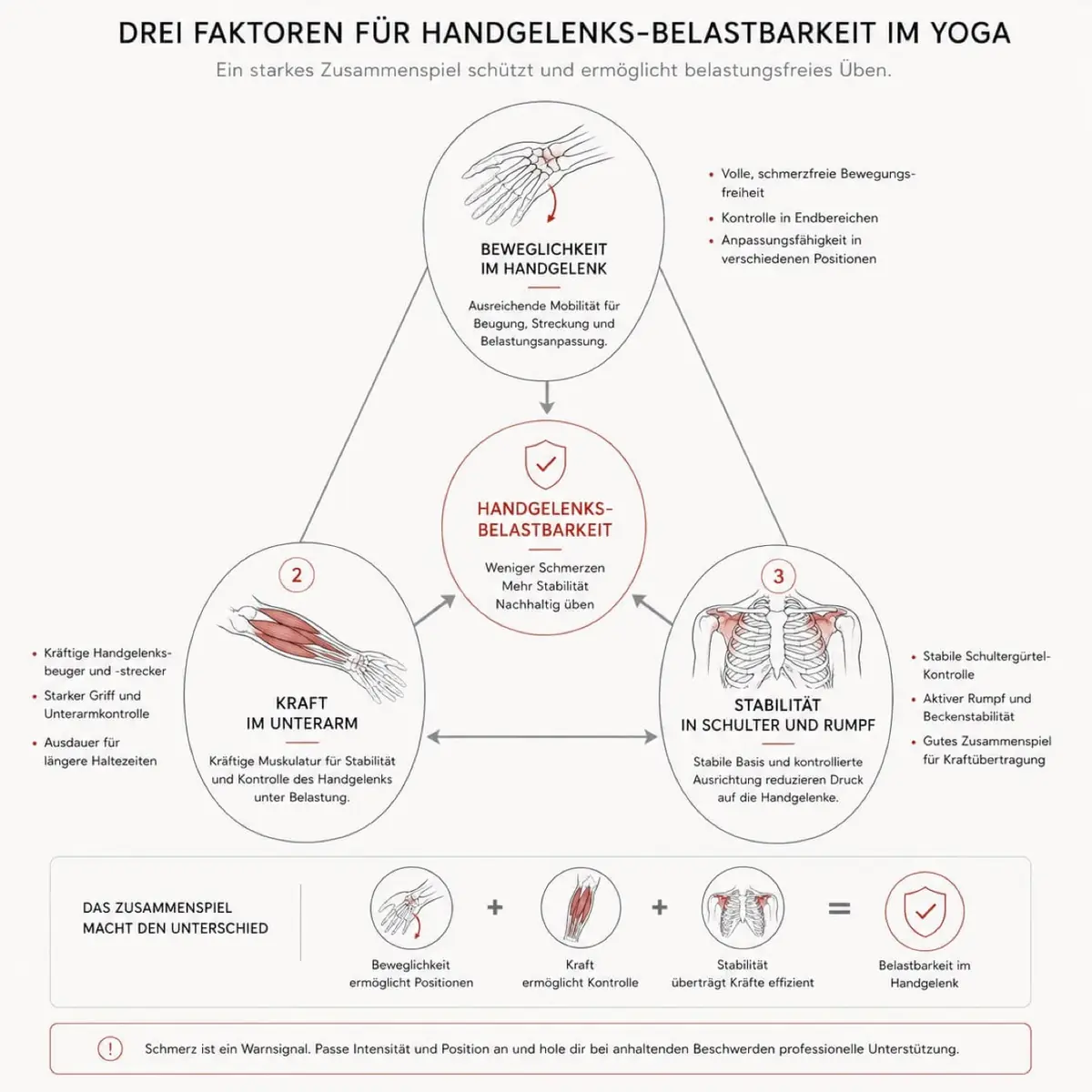
Building load capacity in the long term
In the long term, it's not just about stretching. Wrists, forearms and shoulders need to build up load gradually.
A stable core is just as important. When the pelvic floor and deep abdominal muscles – the two bandhas – are actively engaged, body weight is distributed better across the whole body. This means the wrists have to take less load on their own in the vinyasa and are noticeably relieved.
If the complaints keep coming back, it often makes more sense to reduce your practice for a while and rebuild it in a more controlled, targeted way rather than simply carrying on. Fewer vinyasas, more clean repetitions, more breaks and targeted strengthening can be far more effective than “pushing through”.
Load capacity builds up step by step. Tissue needs time to adapt to pressure, angle and repetition. A good practice respects this process.
When you should get it checked
You should have your symptoms checked by a doctor if you have:
- numbness
- tingling
- loss of strength
- swelling
- bruising
- stabbing pain
- pain after a fall
- symptoms that don't improve despite adjustments
In these cases it makes sense to have a doctor or physiotherapist find out exactly what the cause is.
If you would like a medical assessment or individual advice, you can contact our medical practice Feelgoodmedicine. There, your symptoms are assessed by a doctor and the next steps are discussed together.
The most important rule: yoga doesn't have to go through pain. A good practice adapts to the body, not the other way round.
 Our schedules: find the right class for you
If your wrists are sensitive, talk to your teacher before class. We'll show you suitable alternatives and help you adapt your practice so you can keep practising safely.
You're also welcome to use our free blocks and grips in the studio. At Studio 1150 in particular, you'll find many classes with little or no load on the wrists.
That way your practice stays possible. See you on the mat,
Your Feelgood Team