22.9.2026
Pulses and what research knows about them
Pulses: what happens in your body when you eat more of them
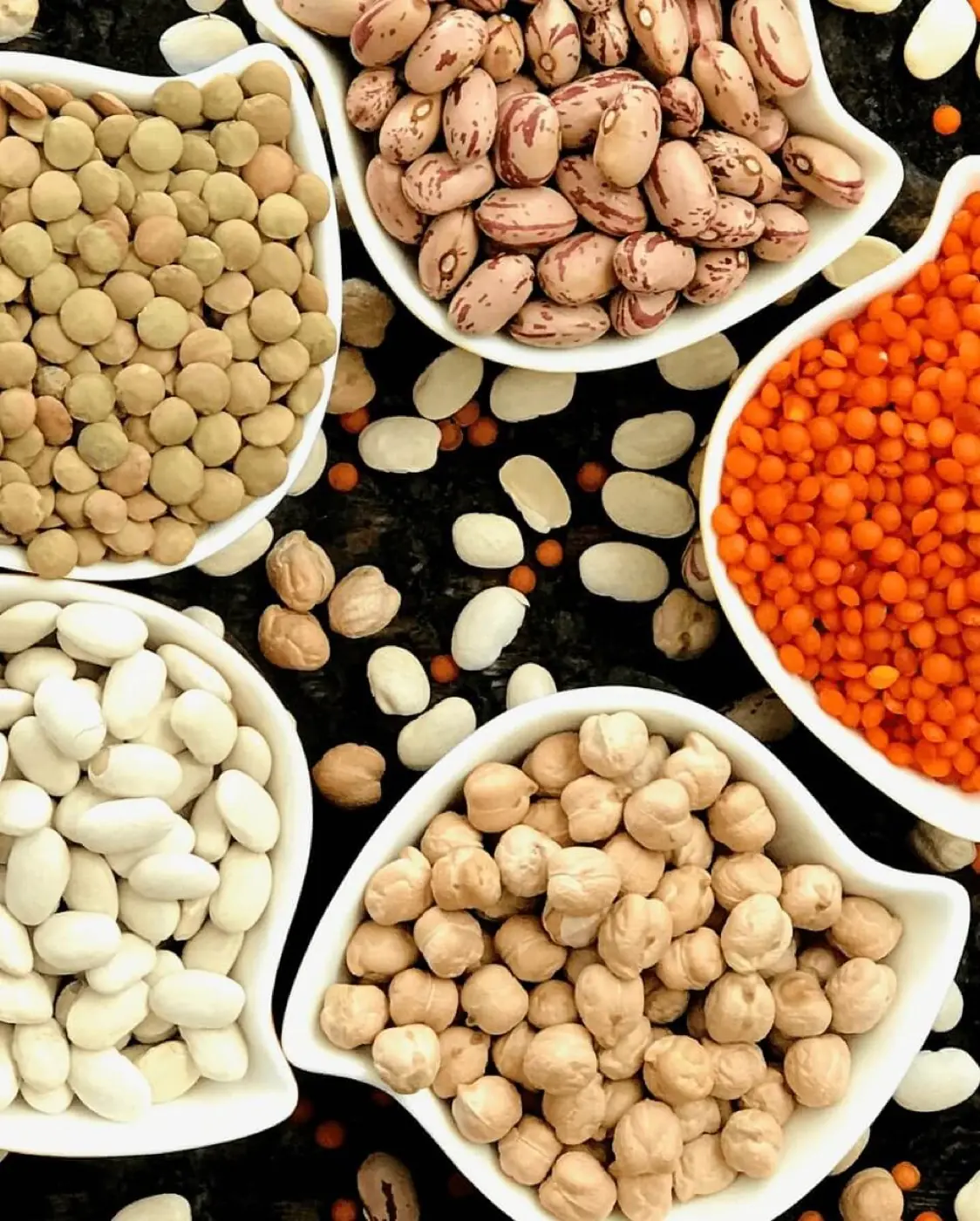
Lentils, beans and chickpeas have fed people for thousands of years. Lentils are among the oldest cultivated crops of all, with archaeological finds going back to the beginnings of agriculture. Even so, on most plates they long played an inconspicuous role.
That is changing. With the revision of the Austrian dietary recommendations in 2024, pulses got their own category in the food pyramid for the first time. At the same time, research is taking a closer look: a review published in 2026 brought together what is known about pulses from human studies, lab and animal experiments – from the gut microbiome to blood sugar and blood lipids.
What of this is proven, what is a hint, and what is still open?
1. They feed the microbes in your gut
Pulses provide plant protein and fibre, plus carbohydrates that are not always fully broken down in the small intestine. This part reaches your large intestine – and with it the microorganisms that live there.
Certain bacteria break down fibre and other carbohydrates. This produces short-chain fatty acids, among other things. They support the gut lining and are involved in the function of the immune system and metabolism.
Whether eating them regularly also changes the composition and activity of your microbiome in the long term is the really interesting question. The 2026 review calls the evidence for this promising – but much of it comes from lab and animal studies. What the observed changes mean for human health is not yet clear. Longer studies in humans are needed for that.
2. Blood sugar rises more gently after eating
Carbohydrates make blood sugar rise; that’s normal. If you eat them as part of a meal with pulses, this rise is smaller.
One review analysed the results of 65 clinical studies with a total of 2,102 adults with and without type 2 diabetes. The result: eating pulses was associated with a smaller rise in blood sugar after meals.
One explanation lies in their structure. Starch and fibre are digested relatively slowly, and the starch granules are surrounded by intact cell walls. This makes some of the starch harder for your digestive enzymes to reach.
The long-term effect is less clear. The same review did find some improvements in markers of blood sugar control, especially in people with type 2 diabetes – but rated much of this evidence as low or very low certainty. The effect right after a meal is far better supported than the effect over longer periods.
3. Cholesterol: small but measurable effects
There are also hints for blood lipids. A 2024 analysis of 24 studies with 1,938 participants concluded that eating pulses can slightly lower both total cholesterol and LDL cholesterol.
LDL stands for low-density lipoprotein. These particles transport cholesterol in your blood. Extensive genetic and clinical data show that persistently high LDL levels contribute to the build-up of plaque in the arteries and so increase the risk of cardiovascular disease.
The scale matters: the observed changes were relatively small. Beans and lentils are no substitute for treatment of high cholesterol. As part of a balanced diet they can make a contribution – no more, but no less either.
4. You stay full for longer after a meal
A systematic review of short-term nutrition studies shows that, on average, participants felt fuller after meals with pulses than after comparable meals without them.
That doesn’t automatically mean you eat less at your next meal, though. The studies couldn’t reliably show this effect. So the evidence supports the feeling of fullness – not the assumption that pulses help with weight loss.
5. Preparation helps decide what you absorb
Pulses contain minerals such as iron and zinc, but also phytate. Phytate binds minerals and makes some of them less available to your body.
Preparation changes that. Soaking and sprouting can lower phytate content and improve the availability of iron and zinc, although the effects vary by food and method. So the nutrient content on paper only tells half the story – how you cook is the other half.
And one benefit that happens before the plate
Pulses were upgraded in the Austrian recommendations not only for health reasons but also for environmental ones.
Legumes live in symbiosis with certain bacteria at their roots. These convert nitrogen from the atmosphere into a form plants can use. As a result, legumes contribute to soil fertility and can reduce the need for synthetic nitrogen fertiliser.
In practice
You don’t need big changes for this. Lentils work in soups, curries and salads. Chickpeas can be made into hummus or roasted. Beans work in stews, wraps and pasta dishes. Dried pulses are best soaked overnight – this shortens the cooking time and can improve mineral availability along the way.
After thousands of years on our plates, pulses are nothing new. What is new is how precisely we can now trace what happens after eating – from the bacteria in the gut to the values in the blood. Part of this picture is still being drawn.
If you want to have your own microbiome tested and tailor your diet to it: in our medical practice Feelgoodmedicine, Dr. Julia Rakus offers a microbiome analysis followed by nutritional advice.
👋 Come by 🌸
Questions: info@feelgoodstudio.at
With love,
🌸 Julie, Knut and your Feelgood Team. 🌸
Sources
- Gut health, blood sugar, cholesterol: what more pulses do in the body – derStandard, 14.9.2026: https://www.derstandard.at/story/3000000339299/darmgesundheit-blutzucker-cholesterin-was-mehr-huelsenfruechte-im-koerper-bewirken
- What happens to your body when you eat more pulses? – Lewis C. E. Mason, The Conversation, 26.8.2026: https://theconversation.com/what-happens-to-your-body-when-you-eat-more-pulses-five-effects-you-need-to-know-289525
- 2026 review on pulses, the gut and metabolism, Nutrients: https://doi.org/10.3390/nu18152571
- Definition and nutrient profile of pulses, Food & Nutrition Research: https://doi.org/10.29219/fnr.v68.10484
- Short-chain fatty acids and their role in the gut, Gut Microbes: https://doi.org/10.1080/19490976.2021.1897212
- Meta-analysis of 65 clinical studies on blood sugar, European Journal of Nutrition: https://doi.org/10.1007/s00394-021–02685‑y
- 2024 review, 24 studies on total and LDL cholesterol, European Journal of Nutrition: https://doi.org/10.1007/s00394-024–03576‑8
- LDL cholesterol as a cause of atherosclerotic cardiovascular disease, European Heart Journal: https://doi.org/10.1093/eurheartj/ehx144
- Systematic review and meta-analysis on satiety, Obesity: https://doi.org/10.1002/oby.20782
- Phytate and the availability of minerals, Nutrition Research Reviews: https://doi.org/10.1017/S0954422408001118
- Soaking and sprouting: effect on phytate, iron and zinc, Journal of Food Science and Technology: https://doi.org/10.1007/s13197-013‑0978‑y
- Nitrogen fixation by root nodule bacteria, BMC Biology: https://doi.org/10.1186/s12915-019‑0710‑0
- Archaeological evidence for the early cultivation of lentils, Rendiconti Lincei: https://doi.org/10.1007/s12210-009‑0002‑7
- New dietary recommendations: more pulses, less meat and dairy – Gesundheitsportal, 2024: https://www.gesundheit.gv.at/news/aktuelles/aktuell-2024/ernaehrung-empfehlungen-neu.html
In English
Lentils, beans and chickpeas got their own category in Austria’s updated food pyramid in 2024. This article sums up what a 2026 review of human, lab and animal studies found: legumes feed the bacteria in your gut, flatten the rise in blood sugar after a meal, have small but measurable effects on cholesterol and keep you full for longer. How you prepare them affects what your body absorbs. We separate what is well established from what is still open. All sources are listed at the end.