19.6.2023
The pelvic floor – what exactly is it again?
Slowly but surely, the pelvic floor is becoming better known. Today we want to take a closer look at where in the body it is located and what it does.
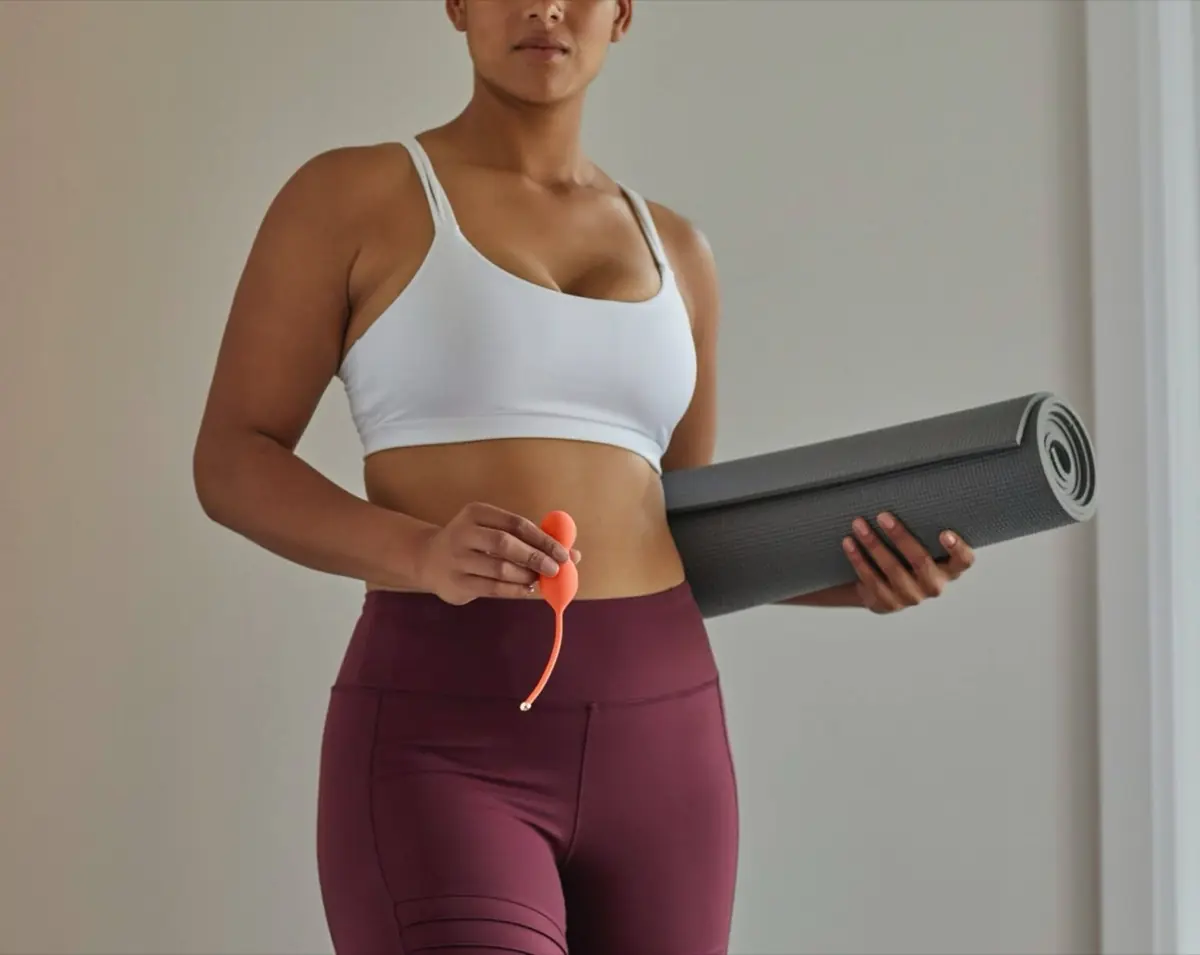
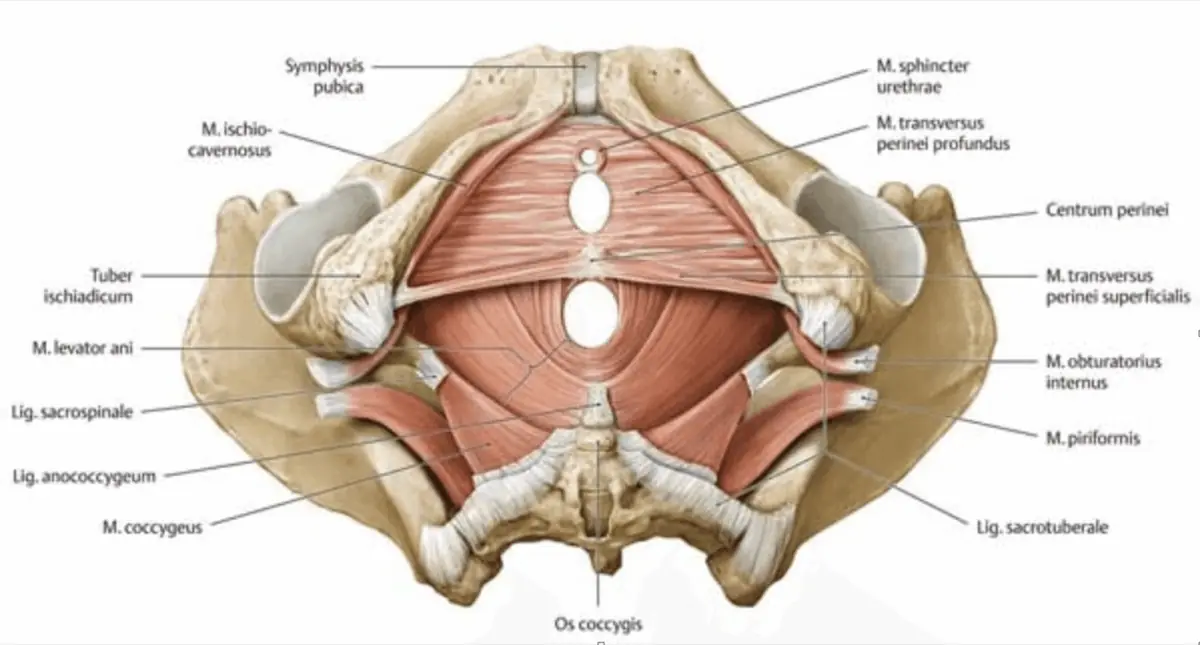
The pelvic floor is a sheet of muscle that closes the pelvis from below. You can picture it like a trampoline stretched between the pubic bone, the tailbone and the two sitting bones. The pelvic floor has two main tasks:
- On the one hand, it has a supporting function: it is responsible for holding all the organs of the lesser pelvis – the bladder, the rectum and, in women, also the uterus – in place, even when we jump or run.
- On the other hand, the pelvic floor has to be able to relax so that urination and bowel movements are possible.
Let's take a closer look at everything it needs to do its job. The pelvic floor is made up of 3 layers. The deep layer (levator ani layer) is shaped like a funnel and has a strong connection to the hip muscles. The middle layer (transversus perinei muscles) is found mainly in the front section and is there mostly to support the bladder. The superficial layer is the erectile tissue layer, which includes the labia of the vulva and parts of the penis that can swell when aroused. You can only ever tense or relax the pelvic floor as a whole, not individual parts of it. Through your posture, however, you can influence which part is used a little more.
Problems with the pelvic floor can occur after giving birth, after a fall onto the buttocks, through recurrent urinary tract infections, or through operations on the hip or the organs, among other things. This does not automatically mean the pelvic floor is too weak; tension can also mean that the pelvic floor can no longer work normally. Various symptoms can then appear. Common complaints include:
- Incontinence (yes, jumping on a trampoline without leaking urine should be possible again, even after several births!)
- Residual urine or difficulty urinating or with bowel movements
- Lower back pain
- A feeling of pressure in the perineal area and uterine prolapse
- Tailbone pain
- Haemorrhoids
- Pain during sexual intercourse
- Menstrual pain
- Pain/tension in the jaw and diaphragm (yes, there is a connection to the pelvic floor here too)
What exactly has caused the pelvic floor to be unhappy, and what the best approach is in the individual case, should be clarified with experts.
Image source: Schünke M, Schulte E, Schumacher U, Voll M, Wesker K. 3.10 Beckenboden- und Beckenwandmuskeln bei der Frau in der Ansicht von kaudal. In: Schünke M, Schulte E, Schumacher U, Voll M, Wesker K, eds. Prometheus LernAtlas – Allgemeine Anatomie und Bewegungssystem. 5th, fully revised edition. Stuttgart: Thieme; 2018. doi:10.1055/b-006-149643. https://eref.thieme.de/cockpits/0/0/coGyn00176/0